
MOTS-c vs. Other Mitochondrial-Derived Peptides: Key Research Differences
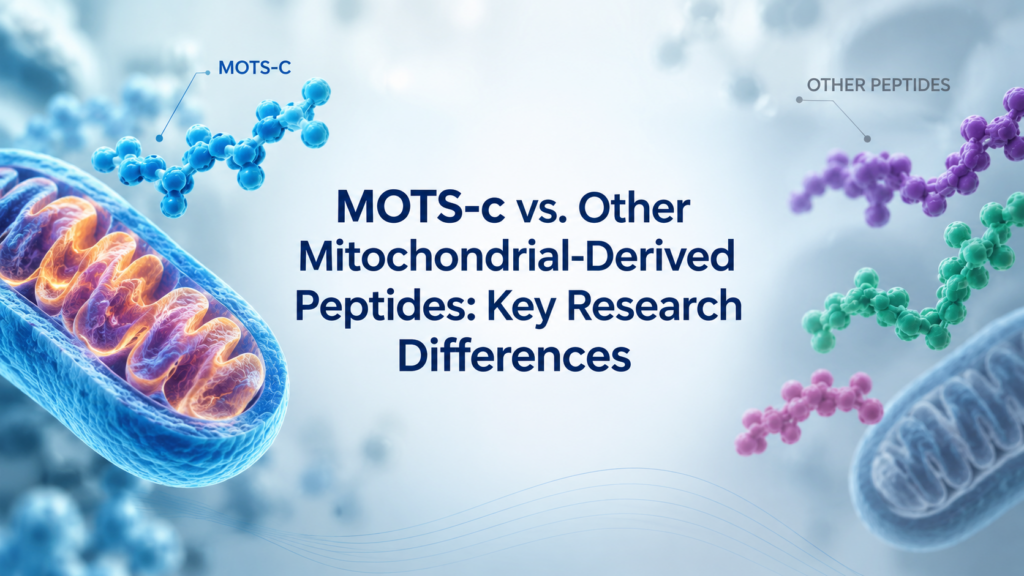
Introduction MOTS-c is not the only peptide hidden inside mitochondrial DNA. It belongs to a growing family called mitochondrial-derived peptides (MDPs), and each member has its own structure, targets and research story. For researchers, these differences matter. Choosing the right peptide depends on whether a study focuses on metabolism, cell survival, brain aging or stress […]
How MOTS-c Works: Understanding AMPK, Glucose Uptake & Mitochondrial Signaling
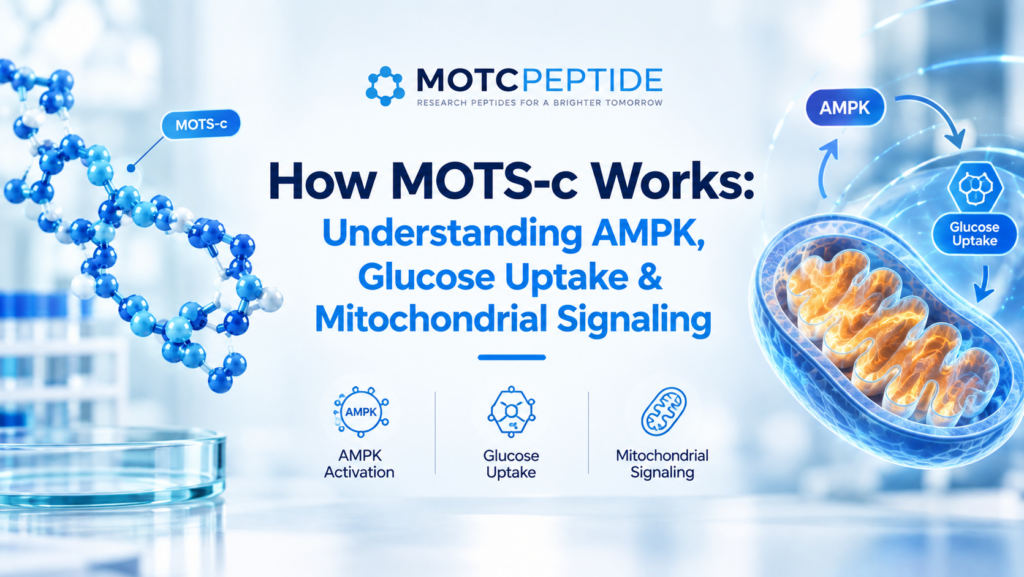
Introduction MOTS-c is a 16-amino-acid peptide encoded by mitochondrial DNA, and its main job in research models is to help cells manage energy. But how does such a tiny molecule change the way muscles use sugar and fat? The answer runs through three connected systems: AMPK, the cell’s energy sensor; glucose uptake into skeletal muscle; […]
What Is MOTS-c Peptide? A Complete Guide to Its Structure, Function & Research

Introduction MOTS-c peptide is a small signaling molecule built from instructions stored inside mitochondria, the tiny power plants found in nearly every cell. That alone makes it unusual. Most hormones and peptides are coded by DNA in the cell nucleus, but MOTS-c comes from the mitochondria’s own separate genome. Since its discovery in 2015, MOTS-c […]